Founder of Sysqo. An entrepreneur whose work spans applied artificial intelligence and a long-standing collaboration on questions of cosmic biology and the origins of life.
A practitioner's record.
Daryl has co-authored an extensive body of peer-reviewed research in astrobiology and cosmic biology, with collaborators including Sir Chandra Wickramasinghe, Edward J. Steele, and Richard B. Hoover. The work appears in journals such as Progress in Biophysics and Molecular Biology, Current Research in Virology, and the Proceedings of SPIE, alongside conference contributions and rapid responses in the BMJ.
Below: a selection of his published work, in reverse chronological order. Each entry links to the full record on ResearchGate.
Richard Brice Hoover · Chandra Wickramasinghe · Daryl H. Wallis
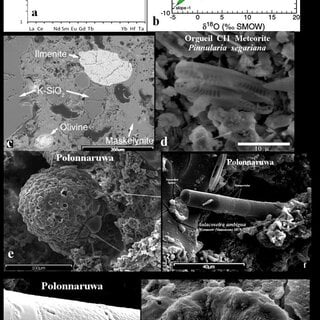
Epithermal Neutron Activation Analysis (ENAA) has provided data on the concentration of Rare Earth Elements (REE) and heat-producing elements (HPEs: K, Th, U) in a variety of carbonaceous meteorites. Space missions and laboratory investigations have provided evidence for liquid water and a vast array of indigenous extraterrestrial organics and biomolecules…
Edward J. Steele · Reginald Gorczynski · Robyn A. Lindley · … · Connor Erade
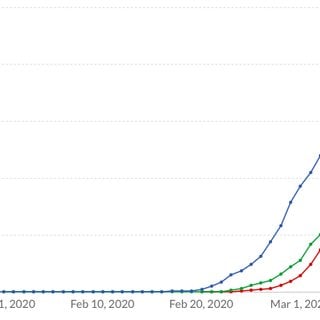
The evidence for the cometary origin then rapid global spread of COVID-19 through 2020 is critically reviewed. We outline why it is an alternative plausible scientific explanation to the current bat/pangolin animal-jump theories. In our view this explanation is consistent with all the available temporal unfolding scientific data (genomic, immunological…)
N. Chandra Wickramasinghe · Edward J. Steele · Reginald Gorczynski · … · D. T. Wickramasinghe
Current Research in Virology
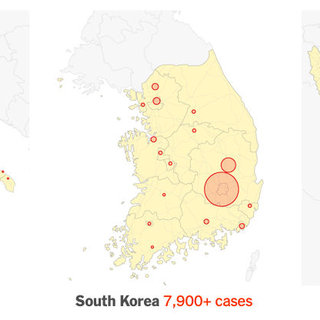
We argue that the new coronavirus COVID-19 was probably linked to the arrival of a pure culture of the virus in cometary debris that was deposited in the stratosphere, and first came down in the Hubei province of China. The subsequent worldwide spread of the virus has taken place by a combination of two effects: the deposition of further large quantities…
Edward J. Steele · Shirwan Al-Mufti · Kenneth Augustyn · … · Yongsheng Liu
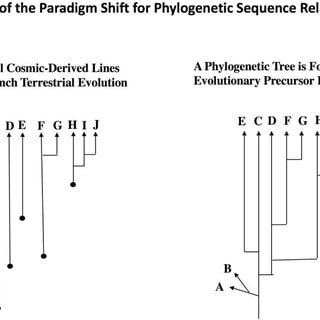
We review the salient evidence consistent with or predicted by the Hoyle-Wickramasinghe (H-W) thesis of Cometary (Cosmic) Biology. Much of this physical and biological evidence is multifactorial. One particular focus are the recent studies which date the emergence of the complex retroviruses of vertebrate lines at or just before the Cambrian Explosion…
Edward J. Steele · Shirwan Al-Mufti · Kenneth Augustyn · … · Yongsheng Liu
Progress in Biophysics and Molecular Biology
We review the salient evidence consistent with or predicted by the Hoyle-Wickramasinghe (H-W) thesis of Cometary (Cosmic) Biology. Much of this physical and biological evidence is multifactorial. One particular focus are the recent studies which date the emergence of the complex retroviruses of vertebrate lines at or just before the Cambrian Explosion…
Jamie Wallis · Nalin Chandra Wickramasinghe · Daryl H. Wallis · … · Richard Brice Hoover
Proceedings of SPIE — The International Society for Optical Engineering
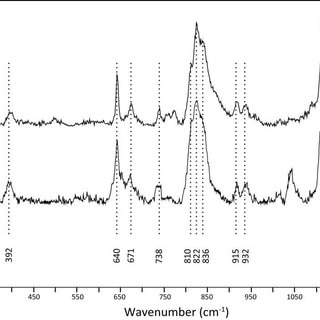
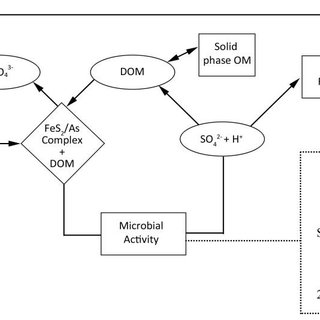
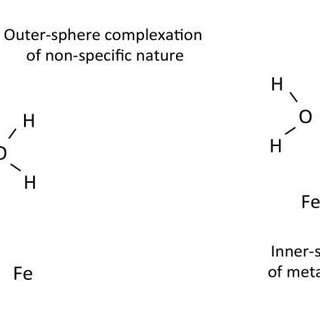
We report for the first time in situ observations of a relatively rare secondary iron arsenate-sulphate mineral named bukovskýite — Fe³⁺₂(As⁵⁺O₄)(S⁶⁺O₄)(OH)·7(H₂O) — found in a shock melt vein of the Tissint Martian meteorite. It is hypothesised that the mineral formed when high concentrations of aqueous H⁺, Fe(III), SO₄ and AsO₄ were maintained…
Jamie Wallis · Nalin Chandra Wickramasinghe · Daryl H. Wallis · … · Richard Brice Hoover
Proceedings of SPIE — The International Society for Optical Engineering
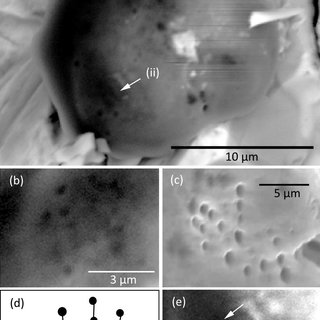
We report for the first time in situ observations of 5–50 μm spherical carbonaceous structures in the Tissint Martian meteorite comprising of pyrite (FeS₂) cores and carbonaceous outer coatings. The structures are characterized as smooth immiscible spheres with curved boundaries occasionally following the contours of the pyrite inclusion…